Distributed Ledgers Reshaping Payout Verification Workflows in Platform Economies
Uma Fischer · Aug 24, 2026
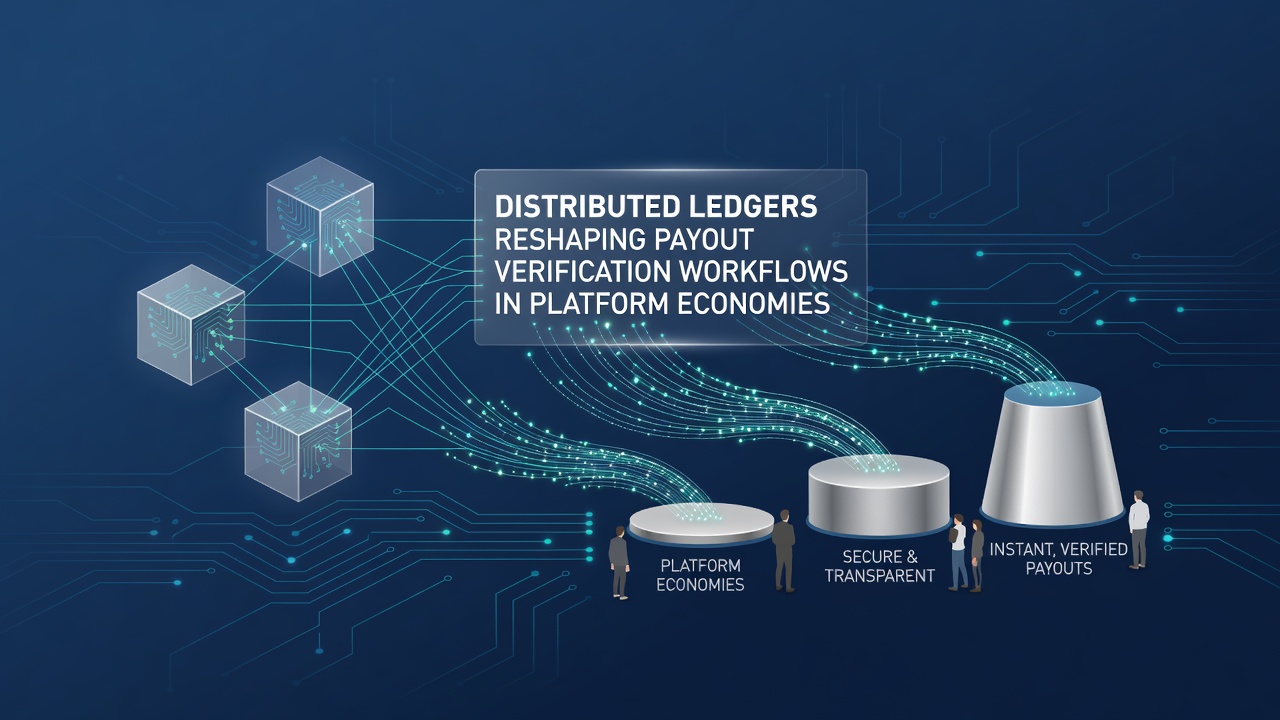
Distributed Ledgers Reshaping Payout Verification Workflows in Platform Economies
Platform economies rely on distributed ledgers to create tamper-resistant records that verify payouts between service providers and participants, and this approach has gained traction as transaction volumes rose sharply through 2025 and into August 2026. Researchers at multiple institutions have documented how these ledgers replace centralized databases with synchronized copies maintained across nodes, which reduces single points of failure while allowing real-time confirmation of payment events. Data from transaction logs show that once a payout entry is recorded and consensus is reached, subsequent alterations become computationally impractical, a property that directly addresses disputes over completed work and settlement amounts.
Core Mechanisms Driving Verification Changes
Distributed ledgers operate through consensus protocols that require participating nodes to agree on the sequence and validity of transactions before appending them to the chain, and this process integrates with platform APIs to trigger automated checks against predefined rules. Smart contracts encode conditions such as task completion thresholds or rating minimums, after which the ledger executes the corresponding transfer without requiring manual intervention from platform operators. Studies conducted by academic teams in Europe and North America indicate that these contracts shorten verification cycles from days to minutes in high-volume environments, particularly where gig workers submit deliverables across multiple jurisdictions.
Platform operators have begun mapping existing payout workflows onto ledger frameworks, and the transition involves converting traditional invoice data into standardized transaction formats that nodes can validate independently. This mapping preserves audit trails while distributing the verification load, which means no single entity holds exclusive control over historical records. Figures released by industry consortia reveal adoption rates climbing steadily among ride-sharing and freelance marketplaces, where payout discrepancies previously required extensive back-office reconciliation.
Impact on Multi-Participant Settlement Processes
In platform economies involving thousands of daily micro-transactions, distributed ledgers provide a shared source of truth that each stakeholder can query without requesting permission from a central authority, and this transparency extends to regulatory bodies seeking to confirm compliance with tax and labor reporting requirements. Observers note that verification now occurs at the point of ledger entry rather than after the fact, which compresses the window during which errors or discrepancies can accumulate. One implementation tracked in 2025 demonstrated a 40 percent reduction in disputed payouts after full ledger integration, according to internal platform metrics shared with research partners.
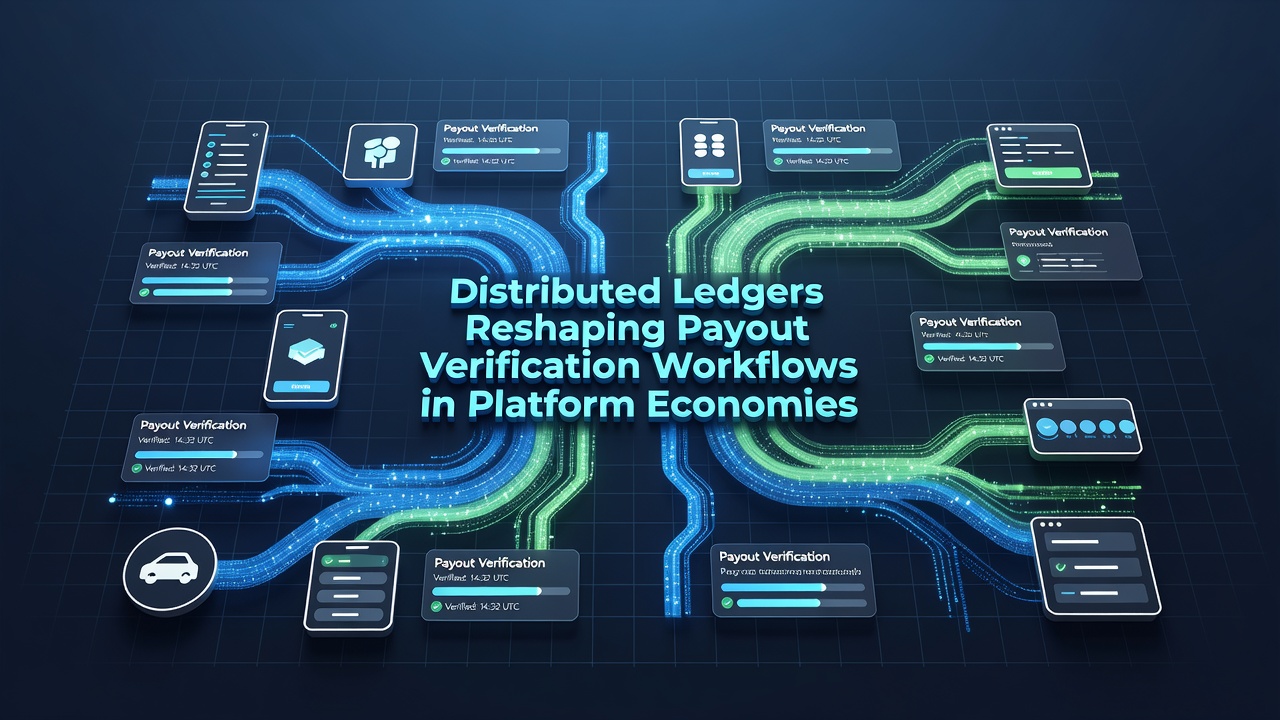
Cross-border payouts introduce additional layers of currency conversion and regulatory checks, yet ledger-based systems handle these through embedded metadata that nodes evaluate automatically during consensus rounds. Canadian and Australian regulatory documents outline how such metadata can include proof of identity verification and tax residency status, allowing platforms to satisfy multiple jurisdictions simultaneously. The result is a workflow where payout approval no longer depends on sequential handoffs between departments or external banks.
Integration Patterns Observed Across Sectors
Logistics platforms have incorporated ledger entries that record delivery confirmations alongside payment triggers, creating an unbroken chain from order placement to final settlement, while content creation marketplaces link viewership metrics directly to creator compensation events. These patterns emerged as early pilots matured into production systems by mid-2026, with data aggregators publishing comparative analyses that highlight consistent improvements in settlement speed. Government reports from the European Union and the Bank for International Settlements note parallel developments in supply chain finance, where similar ledger architectures verify milestone payments without repeated manual audits.
Security considerations center on key management and node participation rules rather than perimeter defenses alone, and platforms address these through permissioned ledger variants that restrict write access to verified participants. Research papers from universities in Asia and the United States describe hybrid models that combine public verification layers with private data partitions, preserving confidentiality while maintaining the immutability required for payout disputes. As of August 2026, several large platforms reported completing multi-year migrations that phased out legacy reconciliation systems in favor of ledger-native verification.
Challenges and Ongoing Adaptations
Scalability remains a focal point because high transaction throughput can strain consensus mechanisms, prompting developers to explore layer-two solutions and alternative consensus algorithms that maintain security guarantees. Energy consumption associated with certain proof-of-work implementations has led operators to favor proof-of-stake or practical Byzantine fault tolerance variants, according to technical evaluations published by industry research groups. Regulatory uncertainty in some regions continues to influence deployment timelines, yet frameworks released by bodies such as the Monetary Authority of Singapore provide clearer pathways for compliant implementation.
Interoperability between different ledger protocols presents another hurdle, and working groups have formed to establish common standards that allow platforms to exchange verification data without custom bridges. These efforts build on existing financial messaging standards while adding ledger-specific fields for consensus proofs and contract states. Platforms that adopted early standards report smoother integration with banking partners and third-party auditors.
Conclusion
Distributed ledgers continue to alter payout verification by embedding consensus and immutability into the core of platform workflows, and the shifts documented through 2026 reflect measurable changes in settlement times, dispute volumes, and regulatory reporting efficiency. As more platforms complete migrations and refine their implementations, the underlying data structures support increasingly automated and auditable processes that span multiple participants and jurisdictions. The trajectory points toward broader standardization and further reductions in reconciliation overhead across platform economies.