Exploring API Connections for Handling International Invoice Flows in Mobile Commerce Networks
Zoe Schmitz · Jun 3, 2026
Exploring API Connections for Handling International Invoice Flows in Mobile Commerce Networks
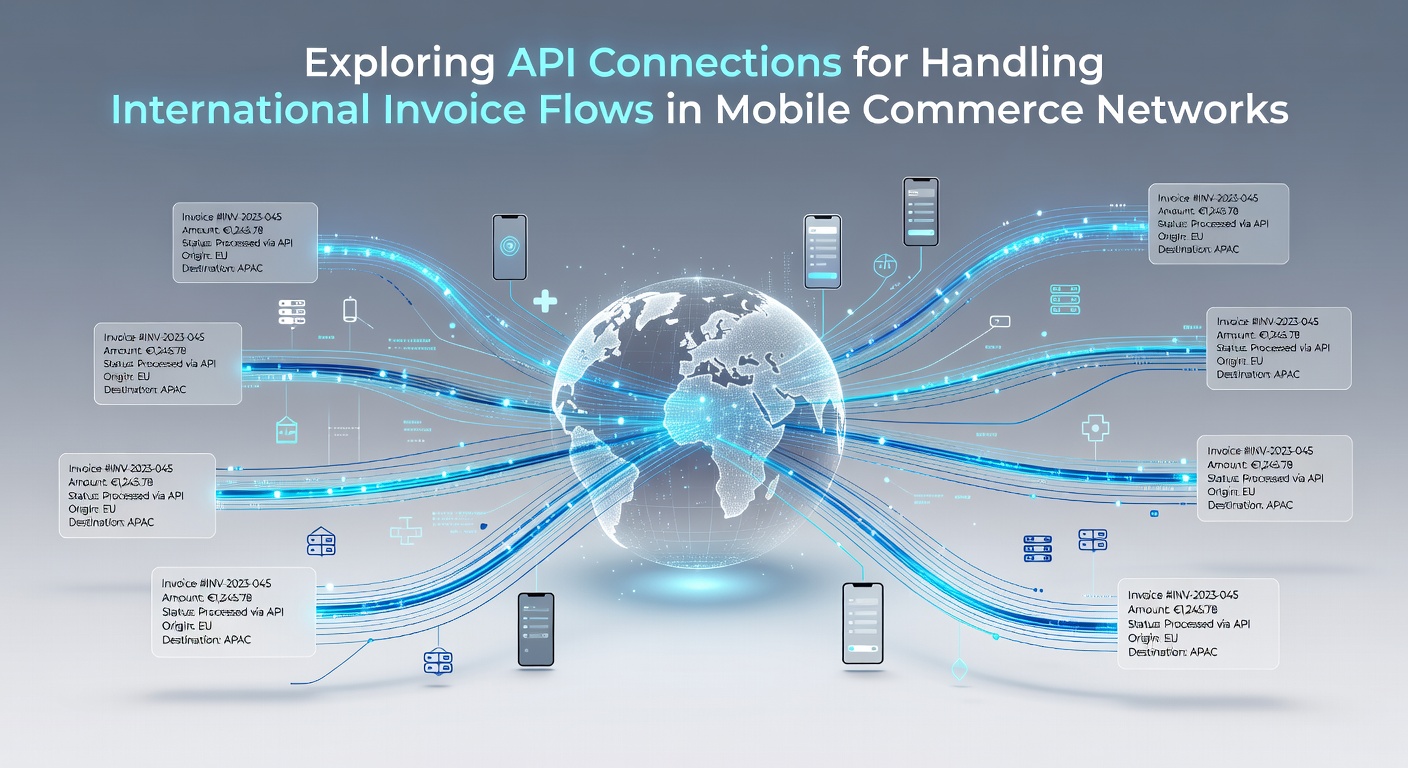
API connections serve as the backbone for managing international invoice flows within mobile commerce networks, where data moves between apps, merchants, and financial institutions across borders. These interfaces enable real-time synchronization of invoice details, including amounts, tax calculations, and payment statuses, while mobile devices generate transactions in diverse currencies and regulatory environments. Research from global payment studies indicates that mobile commerce volumes reached significant shares of total retail activity by early 2025, with APIs handling the bulk of cross-border invoice processing.
Core Mechanisms of API Integration in Mobile Invoice Handling
Developers connect mobile applications to backend systems through standardized API endpoints that transmit structured invoice data, such as line items and customer identifiers, directly from user devices. These connections support protocols like REST and SOAP, allowing seamless updates when an invoice crosses jurisdictions where different value-added tax rules apply. Observers note that mobile networks introduce variables like intermittent connectivity, which APIs address through retry mechanisms and queued transmissions to maintain data integrity during international transfers.
One study revealed that platforms using API orchestration reduced invoice reconciliation times by coordinating with multiple payment processors simultaneously. This setup proves essential in regions where local banking systems require specific formatting for invoice records, and the connections adapt outputs accordingly without manual intervention.
Addressing Cross-Border Challenges Through API Design
International invoice flows encounter hurdles from varying compliance requirements, currency fluctuations, and data privacy mandates that differ by country. APIs manage these by incorporating dynamic fields for exchange rates and embedding compliance checks at the point of data entry on mobile devices. Data shows that in 2025, over 60 percent of mobile commerce transactions involved at least one international element, prompting API providers to embed geolocation services that route invoices through appropriate validation channels.
Turns out the European Commission’s digital finance framework highlights how API standards facilitate automated VAT reporting across member states, reducing errors in multi-country sales. Mobile commerce networks leverage this by pulling real-time regulatory updates into their invoice generation processes, ensuring each document meets the destination market’s specifications before transmission.
Practical Applications in Mobile Commerce Ecosystems
Retail apps handling subscriptions or one-time purchases use API layers to generate and dispatch invoices to customers in different time zones, while simultaneously updating merchant ledgers. For instance, a clothing retailer operating across Asia and Europe might employ APIs that convert prices, apply regional taxes, and issue digital invoices within seconds of a mobile checkout. Researchers discovered that such integrations cut processing delays by up to 40 percent compared to batch-based systems used previously.
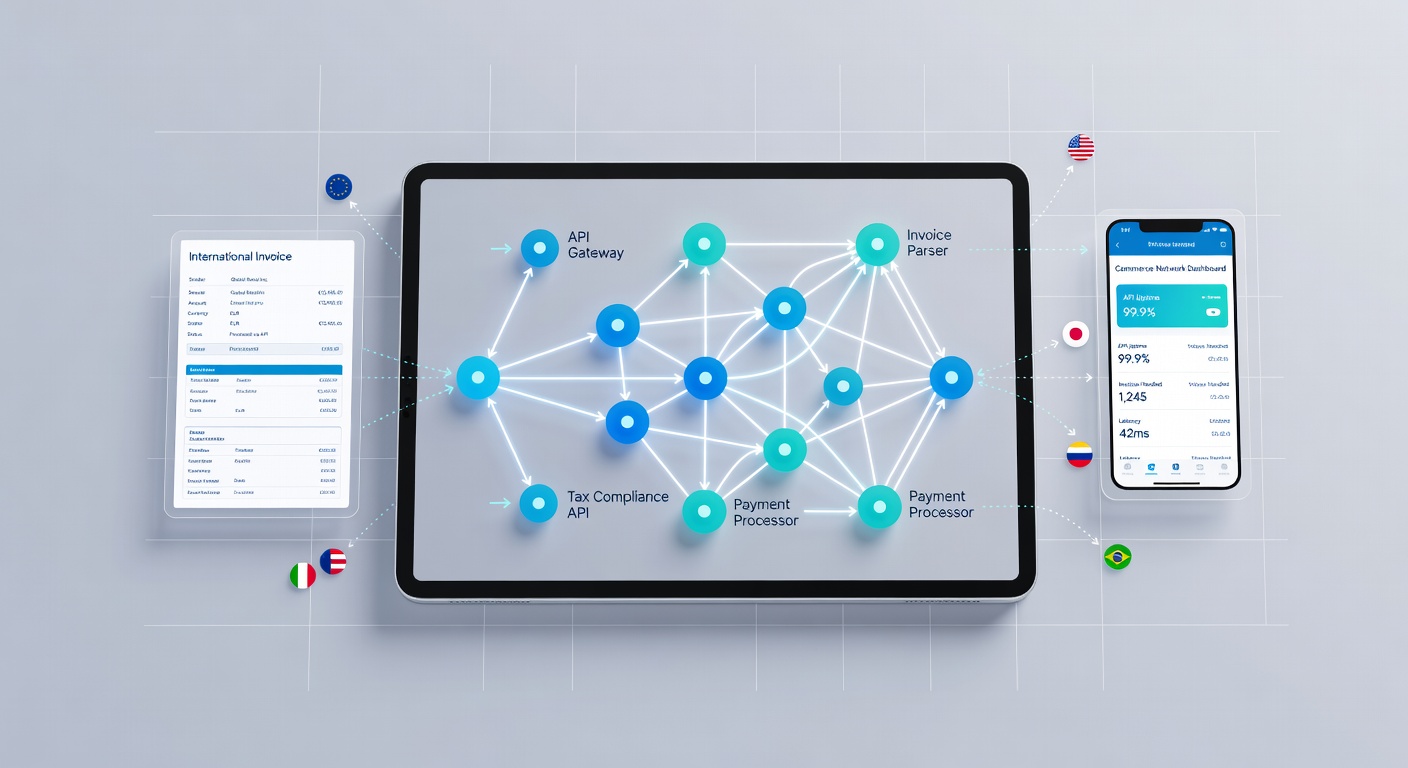
Supply chain platforms further demonstrate these capabilities when mobile field agents log deliveries that trigger invoice creation across continents. The connections pull inventory data, calculate duties, and forward documents to accounting systems, all while preserving audit trails required by trade agreements. According to a report from the Australian Department of the Treasury on digital trade, API-enabled invoice systems supported smoother cross-border settlements for small enterprises expanding into new markets during 2025.
Emerging Developments Around Mid-2026
As of June 2026, several initiatives advanced API interoperability for invoice data, including updates to ISO 20022 messaging standards adopted by central banks in multiple regions. These changes allow mobile commerce networks to exchange richer invoice metadata, such as embedded proof-of-delivery details, without custom workarounds. Industry analyses indicate that adoption of these enhanced APIs accelerated among logistics-focused apps, where international flows demand precise tracking alongside financial documentation.
What's interesting is how partnerships between telecom operators and payment networks introduced API gateways optimized for low-bandwidth mobile environments common in emerging markets. These gateways handle invoice routing with built-in failover to alternate pathways when primary connections falter, maintaining continuity for merchants reliant on steady cash flow from global sales.
Conclusion
API connections continue to underpin efficient handling of international invoice flows in mobile commerce networks by enabling precise data exchange and regulatory alignment across diverse markets. Evidence from ongoing implementations shows measurable gains in processing speed and accuracy when these interfaces incorporate location-aware and compliance-focused features. As standards evolve through 2026 and beyond, mobile platforms gain additional tools to manage the complexities of global transactions without disrupting user experiences on handheld devices.