The Dynamics of Revenue Cycle Management in Global Digital Service Platforms
Hugo Sullivan · Jul 24, 2026
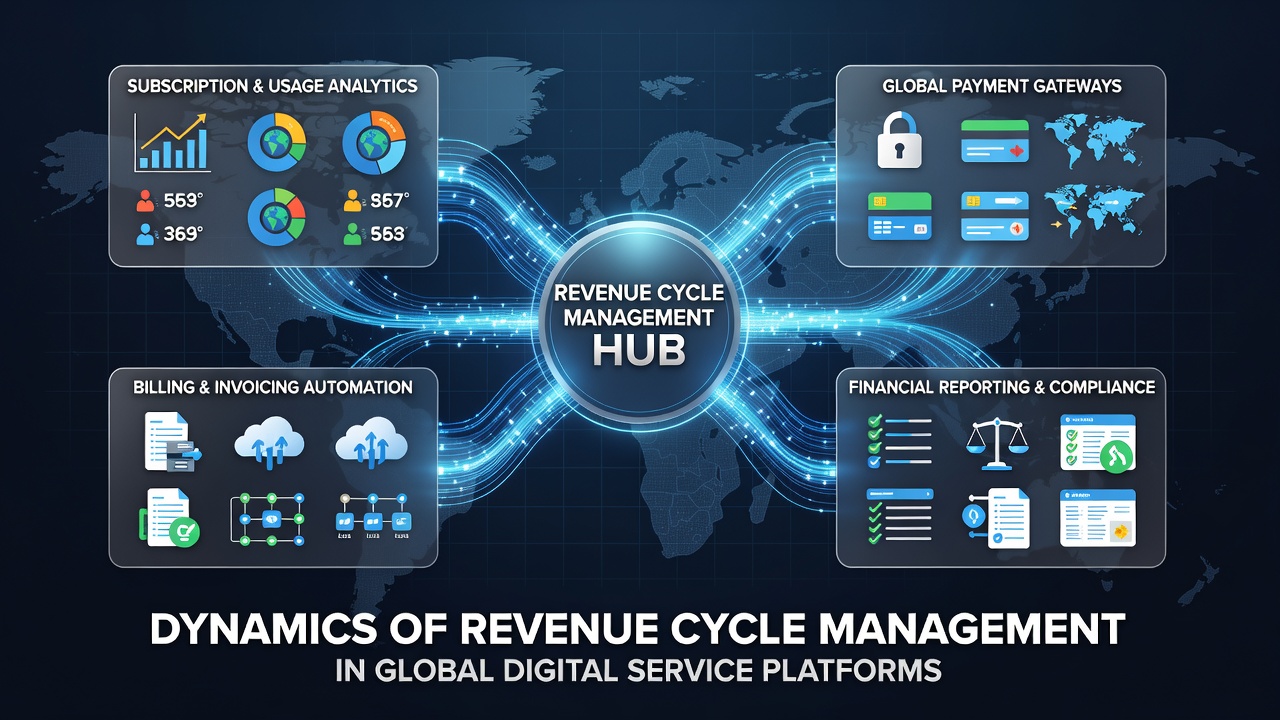
The Dynamics of Revenue Cycle Management in Global Digital Service Platforms
Revenue cycle management in global digital service platforms encompasses the full sequence of financial processes that track revenue from initial customer engagement through final collection and reporting, and observers note how these systems adapt to multi-jurisdictional requirements while handling subscription models that span continents.
Companies operating digital platforms must coordinate order management, usage tracking, invoicing, and cash application in environments where customers access services from varying regulatory zones, and data from industry analyses shows that synchronization across these stages reduces discrepancies in reported figures.
Core Stages and Their Interconnections
The cycle begins with customer onboarding and contract capture, moves through performance obligation identification under standards such as IFRS 15, and extends to ongoing measurement of revenue over service periods, while analysts observe that digital platforms often bundle multiple service elements that require allocation of transaction prices based on standalone selling prices.
Subsequent phases include billing automation tied to usage metrics, revenue recognition schedules that align with delivery timelines, and accounts receivable management that incorporates currency conversion protocols, and research indicates these stages operate as an integrated loop rather than isolated steps when platforms scale internationally.
Cross-Border Considerations in July 2026
By July 2026 several jurisdictions implemented updated digital services tax reporting mandates that directly influence how platforms categorize and disclose revenue streams, and figures from regulatory updates reveal increased emphasis on real-time data sharing between tax authorities in the European Union and Asia-Pacific regions.
Platforms must therefore maintain ledgers that segregate revenue by customer location while complying with value-added tax rules that differ across borders, and studies from economic research bodies demonstrate that misalignment in these classifications leads to restatements during audit cycles.
Technology Integration and Data Flows
Enterprise resource planning systems now interface with platform analytics engines to capture granular usage data that feeds directly into revenue schedules, and evidence from operational reviews shows that automated matching of consumption events to contract terms improves accuracy in multi-currency settlements.

Those who manage these integrations often rely on centralized dashboards that consolidate performance metrics across regions, and reports from accounting standards organizations highlight how such consolidation supports consistent application of revenue recognition policies worldwide.
Compliance and Reporting Requirements
Global digital service providers navigate overlapping frameworks that include the OECD's base erosion and profit shifting initiatives alongside regional digital economy tax measures, and according to the OECD guidelines on taxation of the digital economy entities must document how revenue is attributed to specific market jurisdictions.
Simultaneously the European Financial Reporting Advisory Group continues to refine interpretations of revenue standards for software-as-a-service arrangements, and data released in mid-2026 indicates tighter scrutiny on contract modifications that alter performance obligations.
One case involved a streaming service that restructured its international licensing agreements after auditors flagged inconsistencies in how bundled content rights were allocated across fiscal periods, and subsequent adjustments aligned reporting with both IFRS and local statutory requirements.
Analytics Driving Process Refinement
Advanced analytics tools examine patterns in customer lifetime value and churn that affect projected revenue recognition, and researchers at institutions such as the University of Cambridge have documented correlations between engagement metrics and the timing of revenue realization in subscription-heavy models.
These insights allow finance teams to adjust forecasting models that incorporate seasonality and regional usage variations, and practitioners report that iterative refinement of these models reduces variance between forecasted and actual collections over successive quarters.
Conclusion
The dynamics of revenue cycle management in global digital service platforms rest on the coordinated execution of contract analysis, performance tracking, and jurisdiction-specific reporting, and continued evolution in regulatory expectations through 2026 underscores the need for adaptable systems that maintain consistency across borders while processing high volumes of transactional data.